
The U.S. market experienced a choppy start this week.
From early to mid‑week, volatility dominated as weaker employment data and rising geopolitical tensions between the U.S. and Iran weighed on investor sentiment.
The S&P 500 swung between gains and losses, and selling pressure was particularly visible in high‑tech names.
Overall, the market mood leaned cautious.
However, the tone shifted dramatically toward the end of the week.
On Friday, optimism surrounding AI infrastructure expansion triggered a sharp rally in semiconductor stocks, pushing the Dow Jones to a historic milestone — the first-ever close above 50,000.
<S&P500 weekly chart>

https://jp.tradingview.com/symbols/SPX/?timeframe=5D
Risk appetite returned, and the S&P 500 ended the week on a strong note.
<S&P500 heatmap>
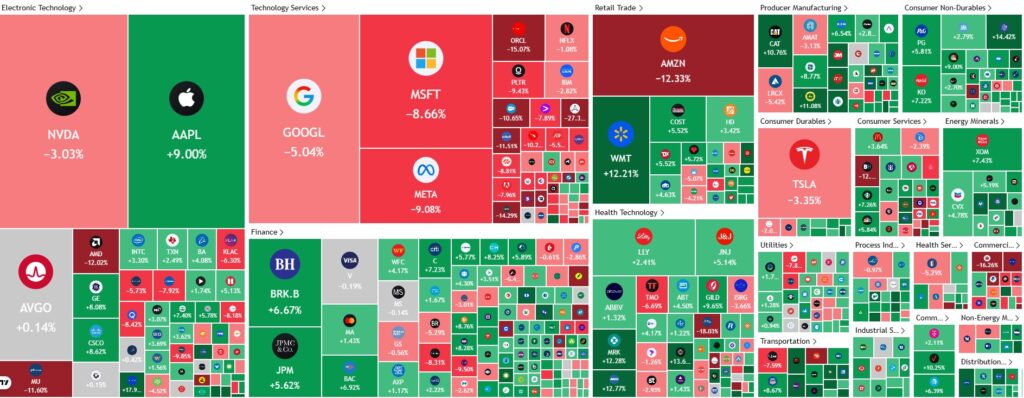
https://www.tradingview.com/heatmap/stock/
- U.S. Stocks: Volatile First Half, Strong AI‑Driven Rebound at Week’s End
- Forex: Dollar Strength Continues vs JPY After “Strong Dollar Policy” Reaffirmed
- Nikkei 225: Moving in Tandem with U.S. Stocks and the Yen
- Market Seasonality: February Is Historically a Weak Month
- Japanese Investor Sentiment: Cautious Attitudes Still Dominate
- Summary: Ignore Short‑Term Noise and Stay in the Market
U.S. Stocks: Volatile First Half, Strong AI‑Driven Rebound at Week’s End
During the first half of the week, the market struggled with:
- Weak employment indicators
- Heightened U.S.–Iran tensions
- Selling pressure in high‑tech stocks amid intensifying AI competition
The VIX rose, reflecting a shift toward “fear” in investor psychology.
But by Friday, sentiment flipped:
- Growing expectations for AI infrastructure investment
- A sharp rebound in semiconductor stocks
- The Dow Jones breaking above 50,000 for the first time
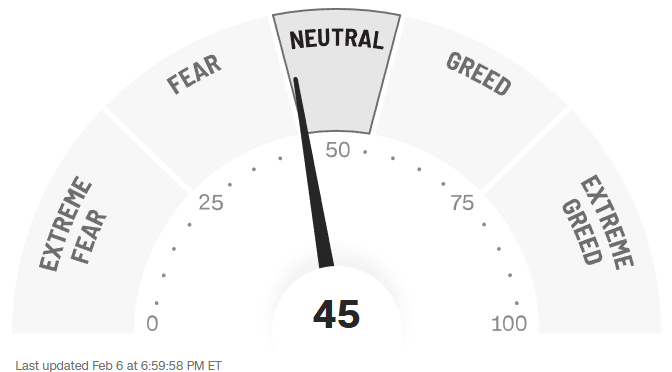
https://edition.cnn.com/markets/fear-and-greed
The strong dollar also supported yen‑based portfolio valuations.
Despite the mid‑week turbulence, the broader trend still resembles a “rising market with intermittent corrections”, highlighting the stability of long‑term index investing.
Forex: Dollar Strength Continues vs JPY After “Strong Dollar Policy” Reaffirmed
The USD/JPY pair strengthened this week after the U.S. Treasury Secretary reaffirmed a “strong dollar policy.”
- Expectations of prolonged higher U.S. interest rates
- Increased demand for the dollar amid geopolitical risks
These factors combined to support the dollar, benefiting investors holding foreign assets in yen terms.
Currency markets continue to be driven by a tug‑of‑war between policy signals and capital flows.
Nikkei 225: Moving in Tandem with U.S. Stocks and the Yen
The Nikkei 225 moved largely in line with U.S. equities and currency fluctuations:
- Weaker during yen‑strength phases
- Rebounding when the yen softened
Meanwhile, the Bank of Japan’s decision to begin selling ETFs drew attention.
Japan is gradually exiting its decades‑long ultra‑low‑interest‑rate regime, prompting households to reassess mortgage strategies and asset allocation.
Market Seasonality: February Is Historically a Weak Month
If the recent ups and downs have made you uneasy, you’re not alone.
Historically, February tends to be one of the weaker months over the past 50 years.
This is often seen as a reaction to the “January effect,” and in many years, February serves as a “run‑up period” before stronger markets in March and April.
No need to rush — Just keep buying steadily with a long‑term mindset.
Japanese Investor Sentiment: Cautious Attitudes Still Dominate
A recent survey highlighted the following:
- “I don’t invest”: 34.6%
- Cautious investors: 36.2%
- Aggressive investors: 29.2%
- New NISA: “Aware but not using”: 36.0%
- “Don’t know about NISA”: 22.1%
Interest in investing is rising, but actual participation remains limited.
Ultimately, wealth building depends on whether individuals act within their own risk tolerance.
Understanding how global investors behave may help more Japanese investors take their first step.
Summary: Ignore Short‑Term Noise and Stay in the Market
This week brought valuable lessons:
- Early‑week volatility from weak employment data and geopolitical tensions
- A powerful AI‑driven rebound on Friday, with the Dow hitting 50,000
- Strong dollar supporting yen‑based valuations
- February’s seasonal weakness, but historically strong March–April
- Japan moving toward interest‑rate normalization
- Japanese investors remain cautious, but NISA users are ahead of global trends
When markets fluctuate, your mindset matters more than ever. Long‑term, diversified, consistent investing is what drives real wealth.
As always, stay patient, stay disciplined — and stay in the market.

コメント